AI vehicle inspection: finding dents and scratches for faster claims
A camera can walk around a vehicle in a minute and mark every dent and scratch. Here is how AI damage inspection works for claims, rentals and fleets.
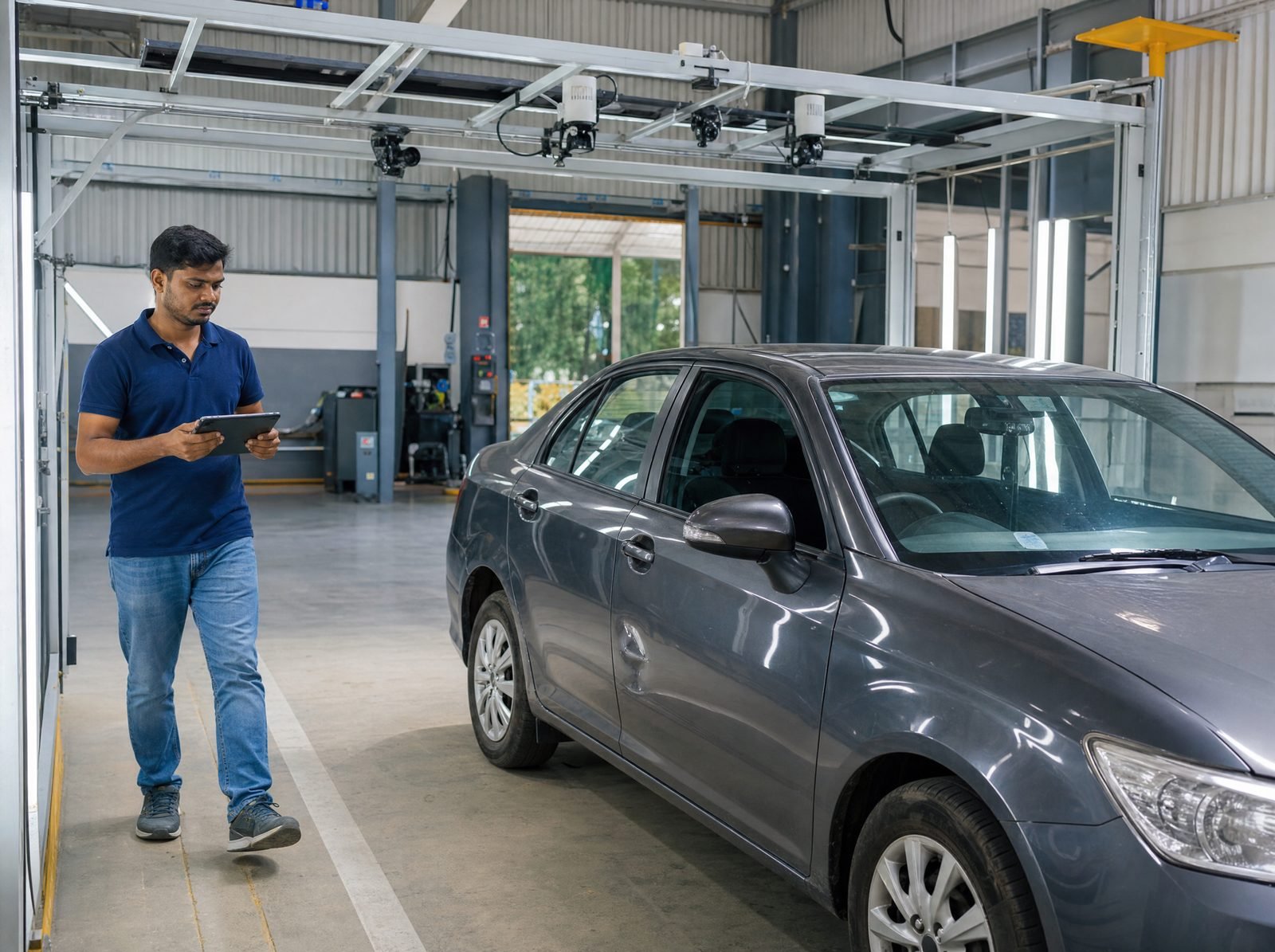
AI vehicle inspection uses computer vision to find and mark damage such as dents, scratches, cracks and broken parts from photos or video of a vehicle. Instead of a person walking around with a clipboard, a phone or a fixed camera captures the vehicle, and the software returns each damaged panel with its location and severity in about a minute. The result is a consistent, time-stamped record that both sides can trust.
Where is AI damage inspection used?
- Insurance claims: the customer or surveyor captures the vehicle, and the claim starts with a structured damage report instead of a few unlabelled photos.
- Vehicle hand-overs for rentals, leasing, fleets and dealerships: a check-out and check-in record ends arguments about who caused which scratch.
- Fleet yards and depots: daily inspections catch new damage early and link it to a trip and a driver.
- Used-car buying and selling: buyers and sellers see the same condition report.
How does it work?
- Capture. A guided phone app or a drive-through bay with fixed cameras records the vehicle from all sides.
- Detect. Vision models identify each body panel and mark damage on it: dents, scratches, cracks, missing parts.
- Grade. Each item is given a type and severity so it can be prioritised or estimated.
- Compare. For hand-overs, the new inspection is compared with the previous one so only new damage is flagged.
- Report. A time-stamped report with images goes to the claim, the fleet record or the customer.
Manual versus AI inspection
| Manual inspection | AI inspection | |
|---|---|---|
| Time per vehicle | Several minutes, depends on the inspector | About a minute of capture |
| Consistency | Varies between people and shifts | Same criteria every time |
| Evidence | Notes and a few photos | Marked images of every panel, time-stamped |
| Comparing before and after | Hard and error-prone | Automatic, flags only new damage |
A human still makes the final decision on a claim. The value of AI inspection is that the decision starts from complete, consistent evidence.
What to check before choosing a tool
- Performance on the vehicles you actually handle, including Indian models, commercial vehicles and dusty or wet conditions.
- Guided capture, so that people without training still take usable images.
- Before-and-after comparison for hand-overs.
- Exportable reports and an API for your claims or fleet system.
- Clear rules on where images are stored and who can see them.
Lagaam AI vehicle inspection
Lagaam AI vehicle inspection finds and documents dents and scratches in about a minute, from a phone or an inspection bay. Fleets can link each report to the trip and driver in Lagaam Sutra, and the Drishti dashcam provides road video when damage happens on the move.
Frequently asked questions
Can AI detect small scratches and dents?
Yes, provided the images are clear and well lit. Guided capture and fixed inspection bays give the most reliable results for small damage.
Does AI inspection replace the insurance surveyor?
No. It gives the surveyor and the insurer a complete, consistent damage record faster. Decisions on the claim are still made by people.
How long does an AI vehicle inspection take?
Capturing the vehicle takes about a minute with a guided app or a drive-through bay, and the damage report follows within moments.
Is it useful for rental and fleet hand-overs?
Yes. Comparing check-out and check-in inspections flags only the new damage, which settles disputes about who is responsible.